The energy transition needs a step change
Progress is far too slow, and energy is already too expensive for many people. We need better technologies, faster.
Work with us →That starts with better materials: for generating, transporting, storing and using clean energy.
Sources: UNEP Emissions Gap Report 2026 (warming by 2100); ECMWF via WMO, Jan 2026 (warming today); McKinsey Global Institute, 2024 (deployment); Eurostat via Euronews, Dec 2025 (EU homes).
Material design, from the molecules up
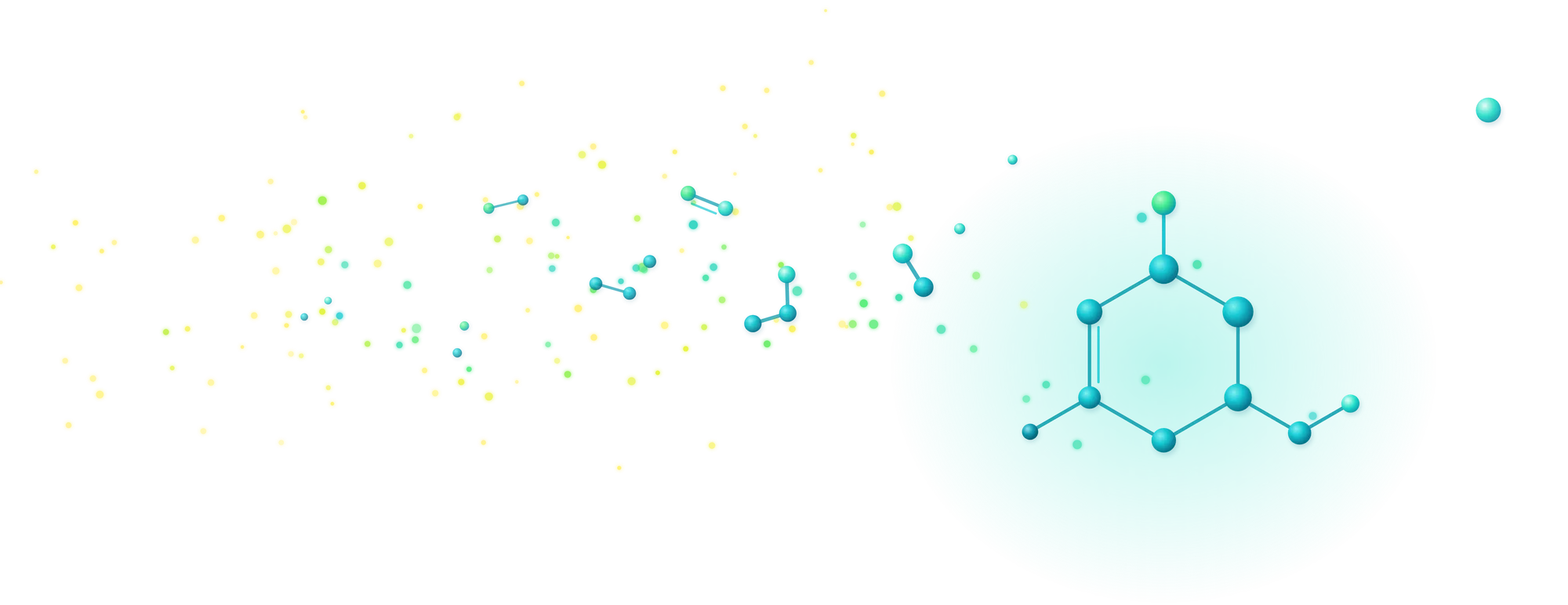
Climate solutions need better materials: higher efficiency, longer lifetimes and free of rare-earth materials. We develop them from the bottom up, focusing on the materials that are hardest to simulate, such as cathodes, catalysts for green hydrogen, magnets and high-temperature superconductors.
AI is moving material discovery to the computer
With AI, we can now search millions of candidate materials in a fraction of the time a lab would need. The results are real.
more stable crystals predicted by AI (380,000) than the ~48,000 known today, in inorganic crystals alone
of AI-predicted compounds attempted by a robotic lab were made (41 of 58), within 17 days
from 32 million candidates to a working battery with a new electrolyte that uses ~70% less lithium
Sources: Merchant et al., Nature 2023 (GNoME); Szymanski et al., Nature 2023 (A-Lab); Microsoft Azure Quantum and PNNL, 2024.
Now is the time to accelerate further
We can do more than screen databases of known materials. For the first time, we can simulate the hardest materials from the molecules up.
Start from the material
All the information has always been captured in the atomic structure. Now we have the compute power and AI to extract it.
Massively higher throughput
AI now does much of the work of a researcher, so we can explore far more materials, far faster. Quantum hardware may accelerate this further, as it is uniquely suited to simulating electrons.
Real progress needs every discipline at the table
AI makes working across disciplines easier than ever.
“I finished my numerical simulation code in 3 weeks, which would have taken me a year without AI.”
“AI has exceeded my PhD students. With LLMs, we now work PI to PI and set up cross-functional collaborations seamlessly.”
Better materials across the energy transition
We are mapping the total opportunity across the energy transition. We started with fuel cells, and will continue with the rest.

Accurate simulation of the hardest materials
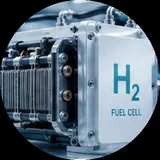
Fuel cells
Cheaper, longer-lasting cathodes
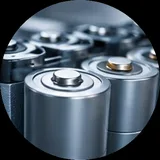
Batteries
Higher energy density, longer life
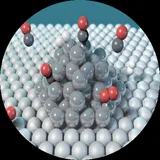
Catalysts for green hydrogen
More efficient water splitting

Solar cells
Higher conversion efficiency
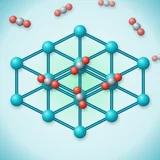
Carbon capture
Materials that capture CO₂ more efficiently

Wind turbines
Rare-earth-free magnets
Electric car motors
Rare-earth-free magnets
Power electronics
Lower losses in power conversion
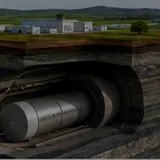
Nuclear waste storage
Safer long-term containment

Room-temperature superconductors
Electricity without losses: in grids, trains and computing

Low-energy compute
Chips that use a fraction of today’s energy

Do you want to push the limits of material design?
We're looking for:
Push computational limits towards real-world impact
We are looking for scientists with experience in higher-order ab-initio theories for materials, computational chemistry or software development to collaborate or join the founding team.
Reach out to learn about our research roadmap and how to get involved. →
By the people, for people and planet
It's time to take action. We are raising our pre‑seed round, and we want EVE to be owned by people who share our mission. Small angel investors are very welcome.
Reach out to schedule a pitch or request our full pitch deck. →
Solve your hardest materials challenges
Working on cutting-edge technologies and limited by material simulations? We would like to explore how we can help.
Reach out to hear what we are building, and where it could make a difference for you. →
Get in touch
Want to hear more? We'd love to hear from you.
EVE Quantum Labs was founded by Linde Wester. Linde has spent 12 years cutting through the hype around quantum computing, working closely with the end users who stand to gain most from it, many of them in materials simulation. She holds a PhD in quantum computing from the University of Oxford, co-built the quantum practice at McKinsey & Company, and built the applications team at the quantum hardware company Alice & Bob.
More on our team soon